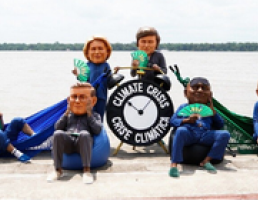
As you read this, thousands are impacted by the devastating wildfires in Spain and France. The fear is also felt much closer to home, with swatches of Cairngorms in the Highlands still battling huge blazes after nearly a two weeks. It is becoming increasingly difficult to ignore the climate crisis we are now living in and the affect it is having on people and our home. Unsurprisingly, it is also a major consequence and cause of inequality.
Do you remember Hurricane Katrina? Before the storm, New Orleans was a city rich in diversity. Around 67% of its residents were Black or people of colour. It was a working class city, with deep history and a sense of community. Generations of families built lives there, and Black homeownership was among the highest in the United States. A thriving community by any measure.
And then the hurricane struck. Overnight the city became a disaster zone. Generations of families were displaced with entire neighbourhoods left underwater. And the inequalities that had always existed suddenly became impossible to ignore.
Take rebuilding homes after the disaster.
The government introduced the ‘Rebuilding Homes’ loan scheme whereby residents affected by the hurricane were able to rebuild their homes. But there was a catch. The loans weren't based on what it cost to rebuild a home, but instead based on what the home had been worth before the storm. Fair on paper. Deeply unfair in reality.
Decades of discrimination had already depressed property values in predominantly Black neighbourhoods. So when the grants arrived, many Black families received thousands less than they needed to rebuild homes that cost just as much to repair as anyone else's.
Some families rebuilt and returned. Many others never did. And for those who couldn’t rebuild, what happened to their homes? They didn’t stay empty for long. Developers moved in. Investors moved in. Wealth moved in. And money definitely moved out.
Soon, the people who had called New Orleans home for generations found themselves priced out of the city they were supposed to be rebuilding.
This is disaster capitalism in action. While a disaster creates devastation, it also creates opportunities for those with money to buy what others are forced to leave behind.
That brings us to today. Climate-fuelled disasters are no longer once-in-a-generation events. And the truth is, New Orleans showed us that climate change doesn't affect everyone equally.
Money buys options. It buys insurance that actually pays out. It buys somewhere else to stay while your home is repaired.
Heck, if you're a billionaire, it might even buy you a rocket to another planet.
That's why climate change and inequality cannot be treated as separate issues. Our Spirit Level at 15 report shows that more unequal societies produce higher carbon emissions, experience poorer environmental outcomes and are less likely to prioritise environmental protection over endless economic growth.
Why? Because inequality changes how societies function. It encourages overconsumption and status competition, while eroding the trust and sense of collective responsibility needed to tackle shared problems.
So every flood, every wildfire and every storm carries two threats.
The first one is always called an act of god. The second one? You tell us: what do they call it when the vultures finally land and feed on the misery?
Whatever the name, it's united by one thing: inequality.