Somewhere in the U.K., the economy is absolutely BOOMING. We know this for a fact, thanks to Sunday Times publishing its rich list last week.
According to the data, the U.K.’s 157 billionaires now hold just under £670 billion between them.
That’s £670,000,000,000. Up from nearly £27 billion in 1990.
Or, in technical economic terms: an absolutely eye-watering amount of money.
So thank you to the Sunday Times, for once again reminding us that while many people are struggling to afford rent, heating or childcare, somebody somewhere is deciding whether to buy another vineyard, island media company. Or more interestingly, how much to donate to a political party and buying impunity and legislative power.
But this isn’t really a story about wealthy individuals “winning”. It’s a story about what happens when an economy increasingly works brilliantly for assets, and far less brilliantly for actual people.
Back in 1990, billionaire wealth amounted to around 4% of U.K. GDP. Today it’s equivalent to roughly 22%.
Meanwhile, for everyone else:
- wages have stagnated
- healthy life expectancy is falling
- child poverty is rising
- home ownership feels impossible for many
- and “economic growth” increasingly exists as a line on a graph rather than something felt in daily life
It’s enough to make you wonder whether parts of the economy have quietly died and nobody told Westminster. (They did). Cue ghost noises.
In our latest blog, we explore the rise of “Ghost GDP”, an economy driven by asset inflation, rent extraction and financialisation rather than shared prosperity.
The idea was picked up by The Guardian in its exploration of the growing disparity between obscene wealth at the top and the reality the rest of us are experiencing.
It’s a stark picture. But it is also a reminder that inequality is not inevitable, and there are alternatives to an economy that feels increasingly hollowed out.
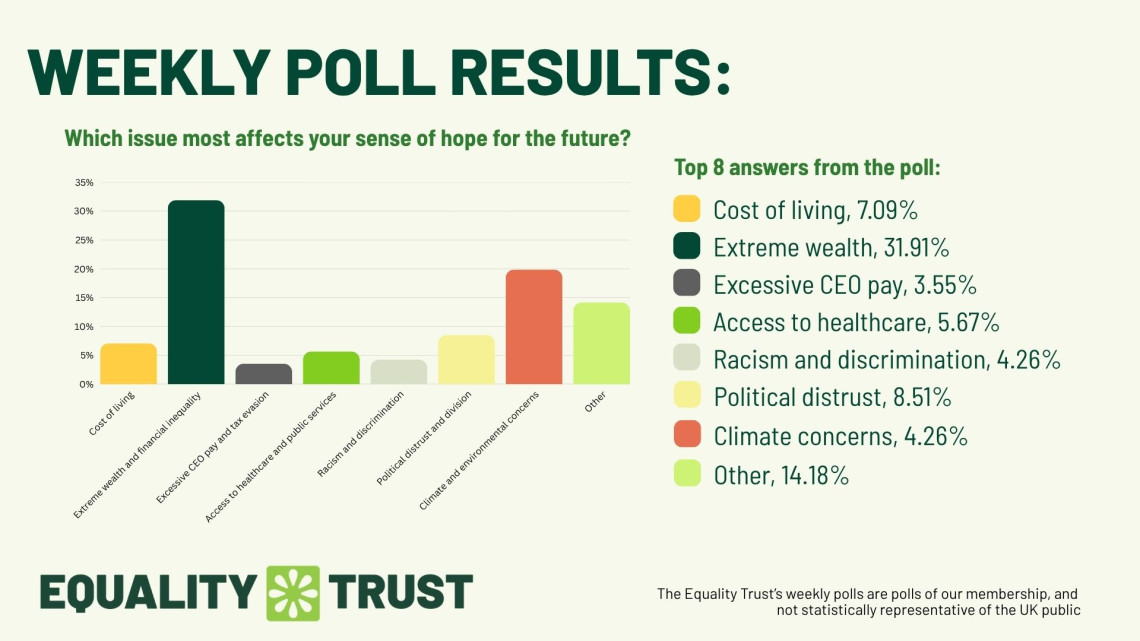
And judging by your responses to our recent survey, many of you are already imagining something different.
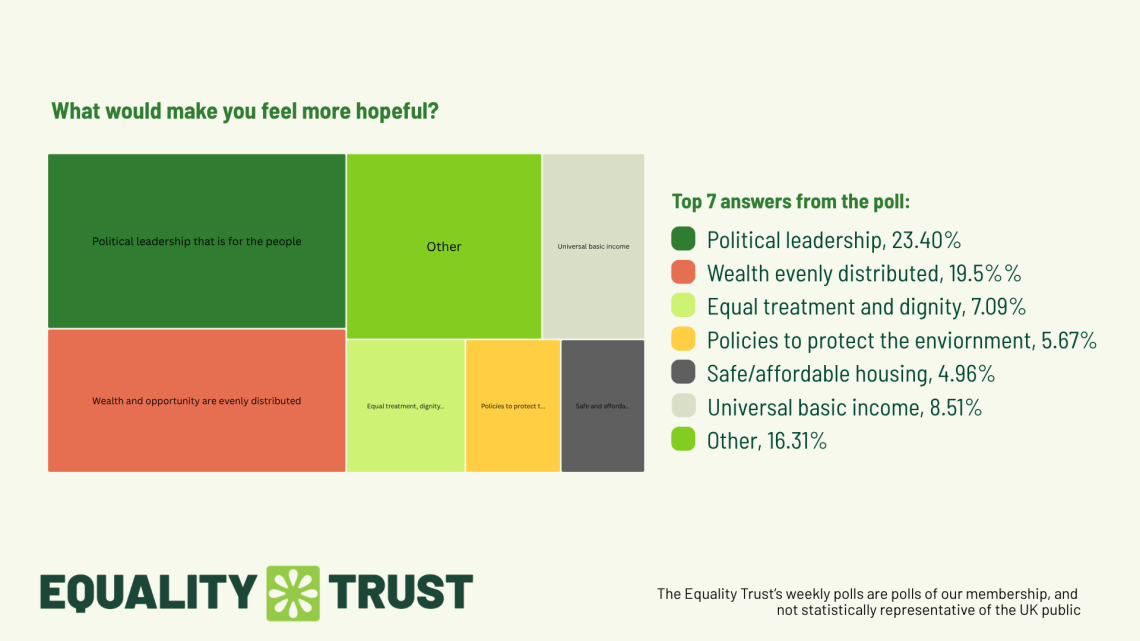
When we asked what would make people feel more hopeful about the future of their communities, the strongest responses were about fairness, representation, security and shared prosperity.
Nearly a quarter of respondents said they would feel most hopeful if political leadership genuinely represented ordinary people. Others pointed to fairer distribution of wealth and opportunity, stronger public services, affordable essentials and economic security.
Take a look at the results below, or read the full blog on our website, here.