Hi ,
The World Economic Forum has kicked off in Davos as the world's great and good gather with the world's worst and wealthy to cram themselves into a small town and make deals, hold events, get drunk on $1,000 bottles of wine and complain that all the corporate sponsorship and tech company newcomers have made Davos gauche.
This year, however, the whole event has been upended by the Ongoing Globally Relevant Events (or the OGRE, if you like) surrounding the suggested seizure of Greenland, with all eyes on what President Trump will himself say or do when he addresses the Forum tomorrow. They're having an awful time of it. How sad.
The global elite themselves scrambling to react to the whims of a capricious billionaire and the other capricious billionaires that advise him really brings home the way inequality is changing and growing: the world's richest are now openly attempting to rewrite society to exempt themselves from any kind of rule of law or international order.
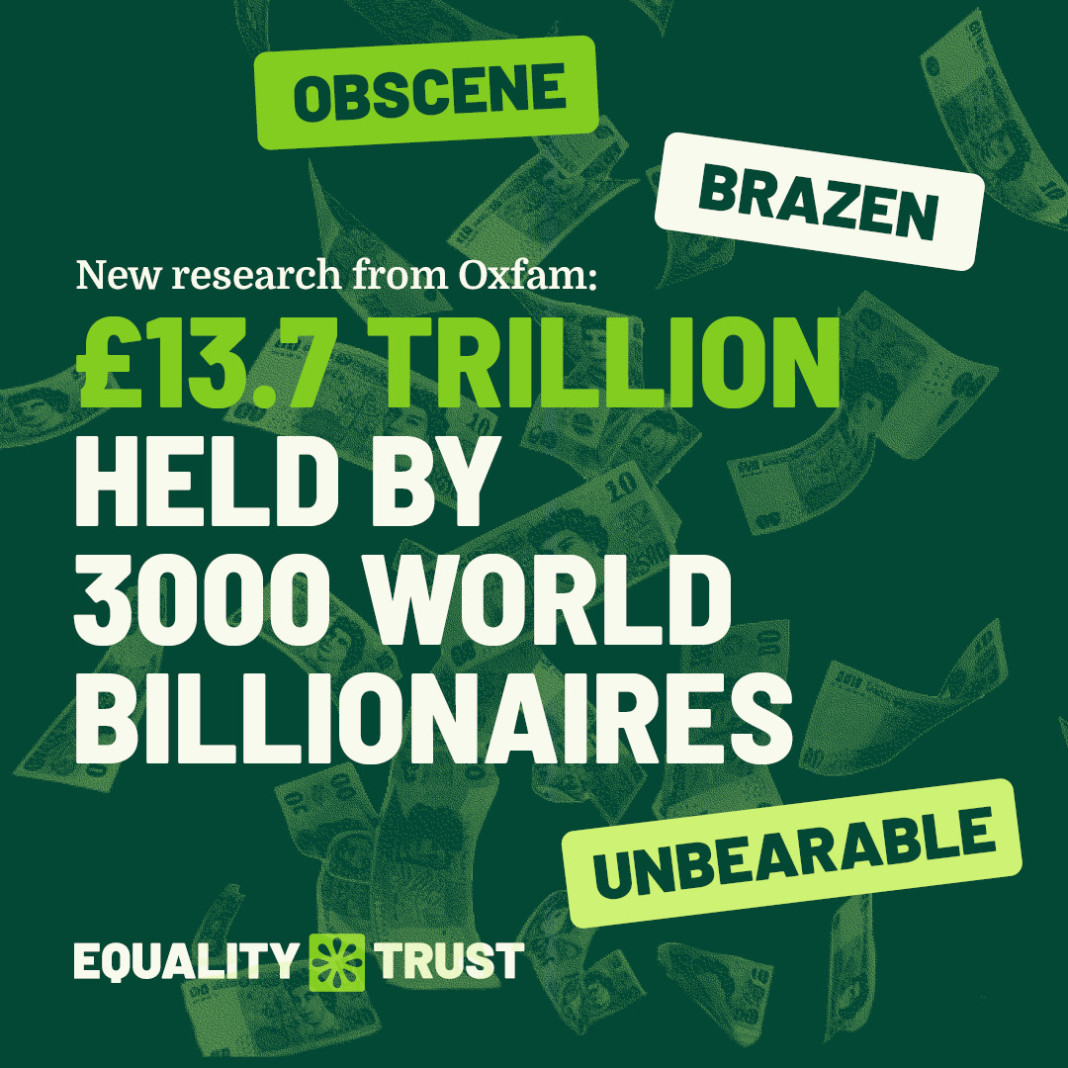
This is also the theme behind Oxfam's excellent new report Resisting the Rule of the Richest, which was published on Monday. It comes with a batch of eyepopping stats: not only has the world billionaire count now hit 3000, but the wealth they've gained since 2020 alone could end, say Oxfam, global poverty 26 times over. But they're not using their piles of riches to do that, obviously. Instead this massive inequality of wealth is being used brazenly to overcome democracy.
Writing up the report in the Guardian, the report's authors draw attention to the number of countries worldwide where governments have capitulated to the demands of oligarchs, as well as the fierce resistance this is beginning to create. Oxfam note that one study found that unequal countries were up to seven times more likely to experience democratic erosion than more equal ones, as well as the fact that billionaires were 4,000 times more likely to hold political office than the rest of us. This mirrors our own findings in our recent report Money, Media and Lords about the way wealth has become increasingly entrenched in our political system over the past decades.
So what can we do about it? I know we share a lot of information in this newsletter that is less than positive – perturbing, even. I can understand people being perturbed right now. But this report had oddly encouraged me. The worldwide acts of resistance they're talking about in Kenya and Nepal are based on the same grassroots organising and solidarity that we're seeing in Minnesota to protect neighbours from ICE raids, or in Venice as the city rejected Bezos' billionaire wedding. There is a growing global sense of solidarity as people realise that we have more in common with the protestors against oligarch rule in Indonesia than we've ever had with the ultra-rich in our own country weaponising their wealth against us. They're not united in Davos – but we are. |