Hi ,
Equality campaigners everywhere are preparing for a budget at the end of November that looks likely to be a defining moment for the next few years: Chancellor Rachel Reeves is advertising that she is very likely to break Labour's manifesto pledge not to raise income tax, national insurance or VAT.
Meanwhile, a dozen different options for "taxing the rich" have been mysteriously leaked to the press. Why, it's almost as if someone was testing the waters to see what the reaction to different ideas was. We've seen proposals for different kinds of council tax reform, exit taxes, property taxes, inheritance tax changes, and even attempts to claim there'll be some kind of tax on wealth. Some of these are good ideas, some aren't, but either way it seems that big parts of the budget are still in flux with less than a month to go. We have everything to play for and we at the Equality Trust will be fighting lobbyists for the super rich the whole way.
But before we spend the next month analysing the policy options, impacts, ramifications and ripples of the hundreds of choices made in the budget, it's worth taking a step back and asking: how did the UK get here? What kind of society have we built, and what kind of society should we be trying to build instead?
So with that in mind, we asked our hard-working trustees to write about how they felt about the UK's situation and the Equality Trust's mission to build a more equal society.
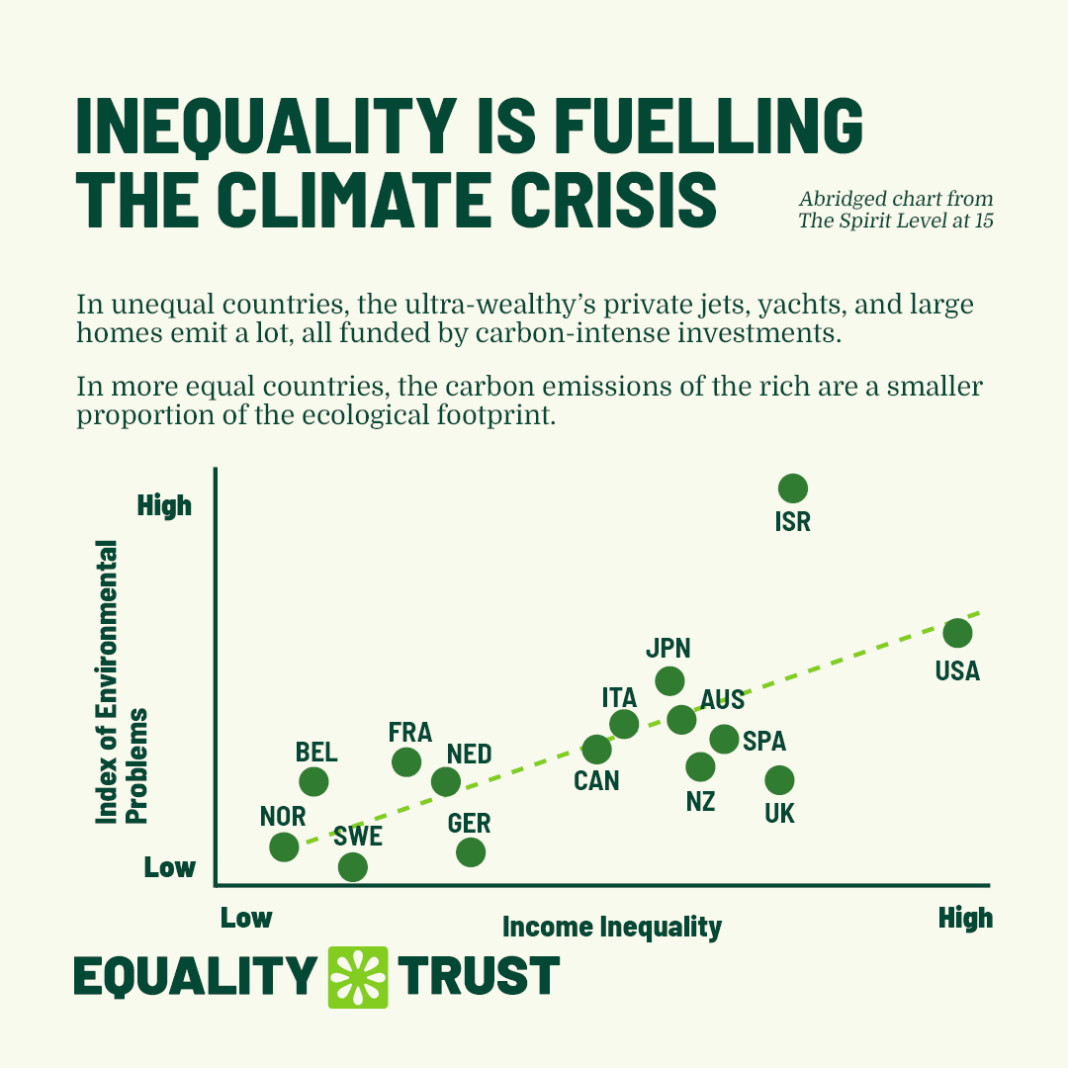
Writing together for Trustees Week, our co-chairs Yamini Cinamon Nair and Tom Allanson joined Professors Kate Pickett and Richard Wilkinson to ask a question that I know frustrates all of us: why do our politicians keep ignoring inequality? We're one of the most unequal big economies. We have reams of evidence of how inequality hurts people, weakens society, and cooks the planet. What more do we need?
"We believe in a new politics of hope – a vision that shows another future is possible. This scale of inequality is not inevitable. Together, we can build a more cohesive, more equal society." |